Monday, June 15, 2015

Green Pass Campaign II, Session 4: Grave Robbing

Note: I'm adding a cumulative +10 xp bonus counter for exploring rooms in a single expedition (i.e., the second room gets +20, the third gets +30, and so forth, up to +250 for the 25th room this week). Since this session was a continuation of last week's expedition, the counter wasn't reset.

June 10, Caudex Annales, 70 AUP
After dispatching a room of zombies, the party elected to break for a short lunch. Finkle the gnome had apparently wandered off (with Mort the wardog and his new pet rat) to do something odd and gnomish. Attempts to inspect the glowing gem in his pot resulted only in the immediate disappartion of the gem with a small 'pop'.

In a room beyond the zombies, searching revealed a set of strange boxes, each full of bones and a single right-handed glove with a weird demon face on them. After lifting the boxes the examine them, a set of four small levers were discovered under each box. Using gloved hands, the party successfully triggered a secret door into a nearby burial chamber containing the remains of a priest of the old nature god Silvanus, with a shrine beyond. The priest's vestments and cudgel were well-preserved, and stashed away for future study. The bard Piper left a small offering and received the blessing of Silvanus in return.

Progressing through a series of similar hidden doors to the south earned egress into a well-traveled hallway that led to a gruesome scene. Two grave-robbers were impaled into the solid stone wall by spears as a warning, their intestines ripped open and slowly rotting. There were also a set of peculiar tracks (definitely non-human) leading east out of the room. The party elected to split into two groups, one following the tracks, and the other positioning as a rear guard.

Following the tracks led to a strange little poltergeist shrieking curses in some lost language to break the silence of the dungeon, and hurling small bits of rock and pottery. A single arrow dispatched the creature. Beyond the ghost, a door led to a small cache of abandoned supplies, including a sledgehammer. Beyond the cache was a bricked door, easily dismantled. Inside the sealed room beyond they found a strange scrying basin surrounded by a set of six carved stone knights in alcoves sunk into the walls. Fearful of the guardian knights, the explorers elected to leave the basin (mostly) undisturbed and returned to the main party.

(Art: Thomas Denmark)
Just beyond the entry point, the party decided to explore up a short hallway... and discovered a pressure-sensitive plate that set off a portcullis. The front lines of the party were briefly cut off as a wave of skeletal guards poured into the room. A judicious application of lizardly force to the gate allowed for a swift reinforcement, although with a powerful incantation from Reed crushing most of the skeletons with earthen teeth, it was hardly an emergency.

After some reshuffling of party members, the exploring group found another bricked-up entrance that led into some private burial chambers. All three tombs contained minor bits of coin and jewelry, and only the middle one had any guardians, some recently risen skeletons. (Well, unless you count a cluster of those nasty little rats squashed beneath a saurian-opened door.) On the way back out the party was jumped by a few more zombies, but dispatched them with relatively little effort.

Feeling uneasy about emerging onto the barrow moors at night, the party elected to return to the Keep (and Centerpost) to recuperate. The sage, Fridaswitha the Scriptrix, identified the ring (as a ring of protection), the cudgel (as a simple enchanted club), the vestments (as an elementally-warded spidersilk robe), and the gem by reputation (clearly something cursed, and now bound permanently to Finkle). She looked with dismay at the small stone runic tablet recovered from the skeletons' tomb, on the grounds that it might contain useful information but would just as likely contain a horrible curse of death. Apparently the party will need to discover someone braver (or more gullible) than her to read it!

Terra and the barbarians continued to investigate the strange travelers passing through Centerpost from the east. Meros the nightblade found an underworld fence willing to purchase his dubiously pocketed gem.

The bard applied his considerable skill at seduction to arrange a charming dinner date with Frida (a perfect 10 on the Hot-or-Not Dice Check, just for the record), deciding only at the last minute that it
might be ethically dubious to propose marriage to her solely in order to get a long-term discount on magical item identification. For now.

Treasure and Experience
Coins: 400 gp, 30 gp, 20 gp, 91 sp, 400 sp, 123 sp, 300 sp, 200 sp (=> 561 gp)
Gems/Jewelry: 15 gems (200 each), electrum necklace (56), 2 electrum bracelets (52 each), silver locket (60), 2 platinum necklaces (174 each) (=> 3394 gp)
Trade Goods: 4 demon-face ceremonial gloves that are really good for disguising your right hand during... a puppet show, maybe?
Items of special interest: a magical ring, a glowing gem, spidersilk clerical vestments, a cudgel, a runic tablet, a pale grey potion, and a sky blue potion smelling of lilacs

Total nonmagical treasure value: 3955 gp, after -679 gp (20% fee) to appraise jewelry
Gold per share: 312 gp

Explored: 25 rooms (1 barrow mound with 3 rooms, 22 catacomb rooms)

Killed: 11 giant rats (55 xp), 7 skeleton guards (91 xp), 4 zombies (116 xp), 7 skeletons (91 xp), 1 noisy poltergeist (5 xp), 6 zombie patrollers (174 xp)
Turned: 7 zombies (203 xp)
Tricked into wandering off to certain doom: 11 tomb robbers (550 xp)
Squashed by a punched-in door ('saurian lockpick'): 8 giant rats (40 xp)

Total experience from treasure: 3955 xp
Total experience from kills: 1325 xp
Total experience from exploration: 3250 xp
Total experience: 8530 xp
Total experience per member: 741 xp

Note: Meros the greedy nightblade receives an additional 200 gp and 200 xp for his malicious act of thievery. And possibly also the eternal seething hatred of the rest of the group -- but, hey, shiny gem!

Thursday, June 11, 2015

Combat Maneuvers

Every man-to-man combat system begins with the assumption that both sides will take turns bipping one another with swords or lasers or whatever. The moment you allow for more complicated forms of interaction, things can get amazingly complicated in a hurry.

Our current campaign under the ACKS system uses a double-test for any special combat maneuver:
  • make a normal attack with a -4 penalty, then
  • give the target a saving throw vs paralysis
Effectively this makes success depend on three things: (1) attacker level, (2) defender armor class, and (3) defender level. (There's also a loose admonition to apply suitable penalties for size differential, but those are left to judge's discretion.)

The most controversial feature here is armor class. The system designer (Alex Macris) is pretty adamant about the innovation of a "touch AC" in D&D (or a CMD in Pathfinder) going to far in terms of negating the value of gear. The concept here is that being armored doesn't just block attacks, it also frees you up to defend in a totally different and far more confident way. A knight doesn't need to focus on anything except holding a sword and using it to beat someone else on the head. A light fencer needs to focus on survival-footwork first, and so is much more vulnerable to trickery. For example, he's going to constantly be using his sword to parry, which is going to make it easier to sunder that sword.

From a gamist perspective, there's another argument at stake here: "tanks" should be hard to control. If a heavily armored fighter steps forward, you don't want there to be a single right answer for how to neutralize him every encounter. "Trip him and make him fall down" is funny the first time, but if it happens every battle and becomes such an obvious tactic as to be mandatory, then it's negating the whole concept of having armor class as a numerical proxy for defense ability. The best tactic is then always to grapple the tank, then run past to murder everyone else. So special maneuvers shouldn't, in general, be able to disregard armor class, since that would negate the value (and fun) of stomping around the battlefield as an impregnably armored behemoth.

The bottom line is that I've decided it's probably best to keep using armor class as the defending stat for special maneuvers, rather than try to introduce an independent combat maneuver defense. For things like "sunder weapon" or "disarm", I think the best approach might be to define an alternate minimum armor class equal to level + strength-bonus, so that hulking shirtless barbarians can still hold onto their giant axes. High AC defenders could still use armor class, but low AC strikers could replace that with their raw force and tenacity.

Tuesday, June 9, 2015

Green Pass Campaign: Factions

At this point there have been enough encounters and clues that it's getting a little hard to keep track of which organizations are active in the area. Here's a brief overview of the factions and their allegiances:

Durnovaric Expeditionary Force
Durnovar is the most powerful lawful civilization in the region. The expeditionary forces base out of Centerpost. They control both Footman's Notch (the strategically important gate at the high point of Green Pass) and Balewood Keep (the center of military operations on the dangerous east side of the mountains). Their local forces are substantially depleted and scattered after the defeat outside Umeskelion, putting them on the defensive, unable to properly guard trade caravans or patrol against invaders.

Orcs
Quite of few of these cruel beastmen were found lurking in the caverns a few months back, and put to flight. One of their communications was intercepted. They seem to be the advance scouts of some kind of invading army under a commander named Kormoc, with ambitions to capture the gates and invade into the west to pillage and plunder. They are slavers, and tend to seize captives alive. They dislike the acolytes of Orcus. At least one message in orcish has been recovered from a bandit group. Maybe they have some kind of alliance.

Goblins/Hobgoblins
They hate the orcs, but oddly were found living right next door to them. Since they drove off the last assault into their territory, they've probably had plenty of time to regroup and reinforce.

Lizardmen
A handful of these live in the swamp. They dislike all outsiders and regard the region as their own turf.

Bandits and Brigands
There are a few of these around, but there's no reason to assume they are working together. The party has put a significant dent in the operations of at least one of their camps, but clearly they are being sponsored by some external organization. They regard the tombs as haunted, but are driven to raid them by greed and the shortage of caravan traffic. A note recovered from one of their camps mentions cursed tablets that doom whoever reads them.

Necromancers
These haven't been encountered yet, but have been mentioned in rumors and on the treasure map. They function as an underground cabal and serve under the banner of a demigod named Sutekh (modeled after the Egyptian god of violence and disorder). Most of their leaders are arcane magic-users. They are infiltrating all sorts of locations and seizing victims for their unnatural experimentation with creating new golems and undead. Rumor also has it they might be allied with some tribe of bugbears. According to the bishop at Centerpost, they would be unlikely to be in an alliance with anyone loyal to a different death god.

Acolytes of Orcus
They are a rival cult mentioned in rumors, serving the demon prince of the undead, Orcus. (This borrows the name of the Etruscan god of the dead, but here re-envisioned as a wicked demon lord with a long legacy of archvillainy in every edition of D&D dating back to the 70s). The acolytes are supposedly trying to summon a balrog (or balor, or Type VI demon, or whatever the kids are calling them these days). They are chaos priests who raise undead, and also hire troll goons for extra muscle. Rumor has it that they've engineered new types of undead with fire resistance, compensating for a standard vulnerability that heroes in the past have been able to exploit. There's no indication of where they might be operating, or what their agenda might be.

Nergal
A mostly forgotten death god of the ancient Thulian civilization that once ruled Umeskelion in the distant past and left behind the barrows and catacombs. (His name is borrowed from the ancient Mesopotamian god of the underworld.) The art in the barrows seems to depict and celebrate his worship. Probably doesn't have any living followers, although the treasure map mentions something about "Chosen of Nergal" and "twisted servants"...


Monday, June 8, 2015

Green Pass Campaign II, Session 3: Bring Torches!

This session stopped in the middle of a dungeon, so technically no treasure has been recovered and thus there's no experience to award. But I'll still write up the story as far as it's gone.

May 27 through June 10, Caudex Annales, 70 AUP
With Zegzinu and Reed both out of commission for at least a week to recuperate from injuries, the rest of the party elected to divide attention between collecting information from the captured bandit lieutenant, and trying to unravel the mysteries of the various items recovered from the camp. After a few days travel up through the notch to Centerpost, the non-injured portion of the team sought out a sage at the cathedral's scriptorium and library. After carefully lying in wait to find a discerning lady who would appreciate his combination of loremastery and musicianship, the bard Piper finally coaxed his mark (a certain young scriptrix, Fridaswith) into providing a discounted analysis of the sword, staff, and censer.

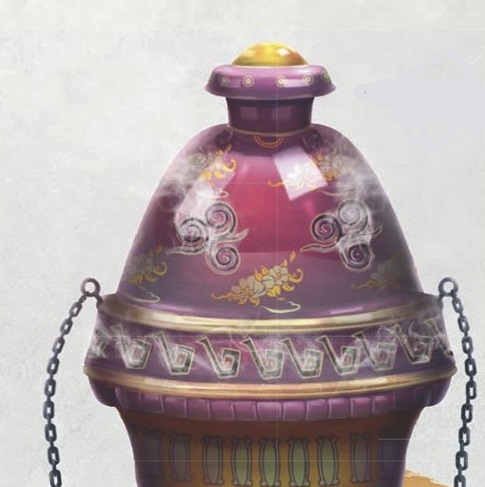
The staff was a fairly minor clerical tool (staff of striking +1, double damage on command word "suffer", unknown charges), but the censer was a peculiar relic of ancient Thulian ritualists, capable of empowering summoning spells with the spilled blood of innocents. After some deliberation, the party elected to leave it at the keep's chapel, as a weapon of last resort in retaliation for any external assault. The potion (Climbing) and scroll (Ward against Elementals) were also identified and stashed for future use. Renata's sword was deemed free of any curse, and recommended for discovery through personal use. (By the end of a session of use, it should be plausible to identify the precise bonus as a +3.) The party returned to Balewood with a hired priest-militant, a few days of rations, a grappling hook, and an extra horse and cart. The gnome Finkle submitted an extensive list of dubious shopping items (itching powder, "fun" mushrooms, snake-in-a-can) to the local ruffians' syndicated for custom procurement. Local room and board were paid by exchange of bardic services. A final check to determine exactly how many broken hearts the bard left behind indicated the answer was: one.

Meanwhile, interrogation of the bandit sergeant revealed that he was a recent hire in the aftermath of some minor disaster, that the disaster had resulted in a treasure being stashed somewhere in the depths, and that Renata had some kind of sponsoring authority funding her operations. He generally seemed alarmed by the prospect of running afoul of her, even after his capture.

After setting out again, the party set up camp on the road and ascended back to the barrows. A few experiments in acoustics convinced the party that the barrows themselves might be partially connected, or at least a few of them were. Unfortunately the clanging roused a procession of zombies out of the depths, which by good fortune were promptly turned en masse by the clericical henchman Brother Bartimaeus with no additional effort required. They reversed course without breaking stride and marched right back into the underground depths.

Exploration of an iron-bound barrow revealed a crypt barren of nearly anything but elaborate traps, the second of which claimed the mage Malcolm as he was distracted by a magical aura, and nearly dashed him to pieces in a spiked pit. After being hauled out, it was clear that he was in no shape to fight or run, and the lizardish gladiator packed him up onto his scaly shoulders. The treasures of the barrow included an enchanted ring, an oddly glowing gem recovered by Finkle's unseen servant, and some spare silver coinage. The members present also pried off an extensive collection of valuable gems (at least 1500 gp worth) from the pillars (minus whatever the opportunistic Meros decided to pocket for his own clandestine personal share).

The band then gathered courage for a direct assault on the depths with the treasure map in hand. Descent into the barrow revealed a massive rampart of skulls and debris below the entry chasm, and they could easily drop into the room below. From that point forward they advanced as a narrow column. First they discovered a room with a strange impish idol and several offerings of bagged coins, which the bard extracted with maximum paranoia using his grappling hook, and even then only after the patrol of a toy soldier proved uneventful. Meanwhile, you-don't-know-I'm-a-nighblade Terra Daystar quietly wandered away to explore a secret passage, which lead gruesomely to a small closet filled with wet human scalps. Apparently something in the depths was hunting grave robbers, a piece of information she elected to conceal as "too disturbing" to be worth troubling the mood of the rest of the party. Besides, it's more fun to be surprised, right?

The only other nearby door revealed the obligatory room full of giant rats, which gladiator Zegzinu squashed with effortless zeal (well, aside from one that was merely stunned which Finkle requested for a pet). With a clear path marked on the map, the adventurers opted to conscientiously observe the time-honored tradition of wandering off in exactly the opposite direction...

Reaction Rolls: Some Clarification

Reactions rolls using a 2d6 "spectrum of results" table date back all the way to the original days of D&D, and probably predate the introduction of a d20 for combat rolls. When extended to a more modern RPG context (like my current ACKS campaign), it can be confusing to figure out how all the new proficiency and class options interact. In particular, there are many more modifiers available, which means that reaction rolls can easily shift into "auto-success" range.

Reaction abilities can be really powerful. Last session, the hardest encounter was actually rolled off a random encounter table. Luckily it involved human grave-robbers, who could be persuaded to wander off (probably to their doom). If they had attacked they might have wiped the party, so having a good reaction modifier is in some sense more powerful than an entire stack of magical weapons and armor.

Looking at the ACKS forums provides a little more evidence as to which abilities are supposed to combine with which other abilities. An extensive thread (with an eventual post by the designer Alex Macris) suggests the system should work in the following way:

1) An initial reaction roll is made, with the GM classifying the encounter as an attempt at Diplomacy, Intimidation, or Seduction, or none of the above (i.e., for beasts, or for monsters with an unfamiliar language).

2) The classification is based on RP behavior, taking note of what the player is actually saying in the greeting. (You can't just say "I'm doing my Intimidation schtick on them", you need to actually be intimidating!)

3) These categories are mutually exclusive, and use totally different types of modifiers. (For example, waving a sword around makes Intimidation easier, but Diplomacy harder!)

4) Whoever is the party leader (i.e., the guy in front) is the person whose class and proficiencies are used. If you want to parley with those guys who just emerged out of that murky catacomb darkness 30 feet in front of you, you need to already be walking in front.

5) After a few seconds of interaction an additional reaction roll can be attempted, either of the same type or a new type. Subsequent rolls get a modifier based on the initial result. By this time a different person can have walked to the front of the group to become the new speaker.

6) After a minute of interaction, another roll can be made. (And then again after ten minutes, an hour, and a day, and each day thereafter.)

Note that this means that the base +2 proficiency modifiers for each of the three basic categories will never stack with one another. The abilities that might stack with the basic proficiencies for the three categories are:

  • the Charisma bonus, which always applies;
  • Mystic Aura (+2), applies with all three, and turns results of 12+ into a short-term charm person result (while in range of the aura);
  • Art or Performance (+1), useful only with Seduction (this isn't in the base rules, but Alex still includes it);
  • Bribery (+1/+2/+3, depending on bribe size), useful only with Diplomacy, but only modifies a subsequent roll after conversation has already begun;
  • Bargaining (+2), useful only with Diplomacy, but only comes into play when haggling in direct competition with another bargainer (make opposed rolls);
  • Any additional modifiers the GM believes are appropriate: Alex lists a huge number of possible situational modifiers, which usually amount to "talking to bad guys who hate you is hard and involves some big penalties in the range -1 to -5".

Federico Andreotti's The Serenade
Magical Music is useful only with potential Seduction targets (the text says "serenade those who are potentially attracted to the character"). It doesn't give any additional modifiers to the Seduction reaction roll itself beyond those for Performance. It does give the option of a Performance throw to instantly convert the outcome to a charm person result. (Performance itself can get a bonus for a high-quality instrument, but not the reaction roll.)

Seduction and Intimidation attempts only get the +2 modifier from the associated proficiency if there's some expectation that these are reasonable reactions. You can't just randomly try to Intimidate every person you meet, only someone who thinks you are an authority figure (from a Disguise, say), or someone to whom you seem obviously much more powerful.

When dealing with normal or giant animals, you use Beast Friendship (+2), but can't use anything else. Alternatively, a successful Magical Music throw can replace any animal reaction with sleep.

When dealing with monsters who speak an unfamiliar language, you use the Charisma modifier but can't use anything else. Learning languages is important! It's possible to imagine exceptions to this-- for example, a temple bladedancer with Performance (Dance) being able to Seduce a foreign nobleman without ever speaking -- but probably not in dugeoneering environments. (Sorry, but orcs hate mimes!)

Sunday, May 31, 2015

Green Pass Campaign II, Session 2: Looking For Trouble

Still a full group of 11 players. This one ended in one of the largest battles I've ever tried to run. Bonus props to Peter for bringing his flute in order to play a bardic wake-up call, and to Andrew for a typing out horrible-pun backstory ("Finkle Bagnozzle the Winceworthy", indeed).

May 25-26, Caudex Annales, 70 AUP
The party woke the next day, made breakfast, and sent a group back up through the spooky forest to inspect the southeastern barrows. The brush placed over the entrances was undisturbed, but the message written in dust outside had been altered... in two ways. First, it had been swept and rearranged to form the name "Renata". More disturbingly, some kind of red ichor had seeped up from below to spell the name "Varghoulis".

The party members present petitioned Helga Omega the wonderworker to use the gift of prophecy to divine the nature of these answers. Meditating deeply on three questions selected by group consensus, Helga entered a hypnagogic state halfway between the world of dreams and reality. The first question, "What will come of opening the tomb?", was answered by a vision of the possible future: The barrows viewed from far above, as a vast legion swarmed forth like ants from a damaged hill. The second question, "Who is buried in this tomb?", produced a vision of the past, in the era of its construction: There were six names of the dead interred in the tomb, and the final name was that of Lord Varghoulis. The final question, "Who is in the tomb right now?", produced a sensation of passing directly into the dark confines and experiencing the frustration and rage of a captive mind longing for release, fueled by centuries of hatred that flowed forth into the ground like a tainted flood of pollution.

The party elected to leave the barrow sealed.

After returning to camp, the party resolved to split into three teams, with the third guarding the base camp. The first (Helga and Piper) returned to Balewood Keep in order to confer with the castellan. The castellan knew nothing of the two names reported, but exhorted them to visit the chapel before leaving and speak to its supervising priest. In the chapel, they discovered a state of moderate alarm and intense discussion. The curate felt sufficiently reassured by the silver-tongued bard to entrust both of them with his secrets. As caravan traffic had declined, the various bandit gangs appeared to be diversifying their activities and trying a little tomb-raiding on the side. The cause of immediate concern is that they would open a tomb with something too deadly for them to handle, maybe even enough to threaten the keep, or the strategic mountain gate at Footman's Notch. The curate volunteered to join them as they returned to the moor to inspect additional barrow mounds.

A cloaked figure (Art:Tritonic)
The second group (both barbarians, the mage Malcom Hawk, one of the nightblades, and Reed Stormcliff in lion form) tracked the path of an apparent warband leading away from the tomb, seeking the probable cause of the less sinister name written in dust. After about half an hour they stumbled onto some sentries, who sent out an alarm. Malcolm was elected spokesperson by virtue of everyone else immediately running or hiding. A cloaked figure emerged in front of him and beckoned him over. She revealed herself as the leader of a force of brigands, and demanded immediate surrender. At the convergence of multiple crossbow bolt trajectories, Malcolm had little choice but to comply. Everyone else hurried back to camp to report on his abduction.

The barrow opened (Art: Zhu)
With daylight dwindling, the group elected to leave Malcolm to his fate while they ascended again to inspect the barrows. The first mound was full of soft, squirming centipedes, discovered when one of Finkle's mechanical toys was released down the passage and unceremoniously devoured in an orgy of scuttling and chittering. The saurian gladiator Zegzinu volunteered to go down first, and initially found it empty... until a half-dozen centipedes dropped from the ceiling. The first four were dispatched with swift blows, but the fifth buried its poisonous jaws deep beneath his scales before the rest of the party could arrive to provide assistance. The curate regrettably had insufficient piety to completely neutralize the poison, but volunteered to suppress its effects long enough for one battle. The treasures of the mound were minor, and offered few clues. A nearby standing obelisk, however, showed a powerful figure being illuminated by fiery light from beneath the earth.

The next mound had an enormous mural of mosaic glass and stones, large and fragile. Extracting it into the light, the scene was found to depict a village observing the procession of an armed company of grim knights under the banner of the ancient death god Nergal.

The final barrow had been thoroughly looted. Inside, the party found a gaping chasm into the earth flanked by massive pillars, with a tripod supporting a block-and-tackle above it. Dozens of footprints led to and from the chasm. A rope dangled down into the darkness. Using a helmet illuminated by a continual light spell, the party could discern a much larger chamber below-- part of the ancient catacombs, the curate suggested. No one seemed interested in descending that evening, but they did remove the rope, in the interest of making it as difficult as possible for anything in the catacombs to utilize this particular exit.

After sending the saurian gladiator back with the curate to recuperate from lingering poison, everyone else laid plans for the rescue of Malcolm from the bandits. Finkle, riding on the back of Helga's familiar (a baby roc!), located the camp and elected to practice his illusions and ventriloquism to distract the sentries while he ruined their campfires and provisions with an invisible servant. [Note: I decided it was good for a -2 morale check penalty.] Meanwhile the rest of the company enjoyed a good night's sleep, and departed the next day.

The final confrontation was furious and violent. The guards went down quickly, but when Finkle rode the lion-shaped Reed (with the wardog Mort on their heels), a dozen bandits all converged of them and began hacking them apart. Reed tore apart several of them before he was seriously wounded by the blades of Renata, and the party had to rush to relieve them. Despite the best efforts of Mort and Helga's pet roc, the fleeing Renata managed to dash off into the undergrowth... but not before Finkle had stolen her broadsword with his whip.

Meanwhile, the nightblades pushed into camp and cleared a path to recover Malcolm, who emerged from a barrel to find a major battle just winding down. The captain of the guards, being clad in plate mail, was less able to flee than Renata and ended up a prisoner. A full sweep of the camp recovered a massive stockpile of accumulated treasures, presumably from multiple raids on caravans and tombs. Several items suspected of bearing enchantments were set aside for further study.

Casualties
Reed Stormcliff, blinded in one eye (-2 ranged attacks, pirate-esque eyepatch)

Treasure and Experience
Coins: 4000 electrum pieces (2000 gp)
Gems/Jewelry: 5 jewelry (24, 130, 200, 180), barrow trinkets (40, 30, 40, 25, 25, 30, 15) = 659 total
Artworks: vial of perfume (25), large tile mosaic (35) = 60 total
Trade Goods: 6 centipede venom glands (300)
Items of special interest: Renata's sword, an antique censer with 3 sticks of incense, a staff, a potion, a scroll, and... a treasure map
Mysterious ancient censer

Total nonmagical treasure value: 3019 gp, with -132 gp (20% fee) to appraise jewelry
Gold per share: 262 gp

Explored: 3 barrow mounds, a bandit camp

Kills: 17 bandits (170 xp), 6 centipedes (36 xp), 1 skeleton (13 xp)
Captives: 1 bandit captain (20 xp)
Put to flight: Renata (320 xp), 2 bandits (20 xp)

Total experience from treasure: 3019 xp
Total experience from kills: 579 xp
Total experience from exploration: 400 xp
Total experience from feeding a wind-up monkey to centipedes: 100 xp
Total experience: 4098
Total experience per member: 356 xp

(Note: Mort the Wardog is taking an  experience half-share but not a treasure share.)

Friday, May 29, 2015

Twenty System Questions

This "twenty questions" list from Necropraxis is pretty good, and worth reproducing here. Most of the answers are just "we're using ACKS and follow its rules. But since not everyone is familiar with them, a summary is potentially helpful.

1) Ability scores generation method?

3d6 in order -- hardcore! You can generate up to five characters, and pick your favorite.

2) How are death and dying handled?

At 0 hp you take a mortal wound and fall unconscious. After battle you roll to figure out if you were killed or just horribly maimed.

3) What about raising the dead?

Quite possible. Expensive. Possible side effects.

4) How are replacement PCs handled?

Start at same experience as your original PC, unless you've banked gold for an heir.

5) Initiative: individual, group, or something else?

Individual, but identical monsters roll as group.

6) Are there critical hits and fumbles? How do they work?

No fumbles. Crits only if you take Weapon Focus proficiency, they do double base damage.

7) Do I get any benefits for wearing a helmet?

Not unless it's magical.

8) Can I hurt my friends if I fire into melee or do something similarly silly?

Totally not allowed, unless you have Precise Shooting, which makes it perfectly safe (but hard).

9) Will we need to run from some encounters, or will we be able to kill everything?

If you wander off the beaten path, you'll need to run from stuff. I'll try to drop hints.

10) Level-draining monsters: yes or no?

Yes. Permanent effect is aging, though, not experience loss. Temporary effect is negative levels.

11) Are there going to be cases where a failed save results in PC death?

Pretty much no, unless your hit points are really low. Some monsters (spiders, scorpions) have deadly poisons. There are suicidal choices that don't involve dice rolling.

12) How strictly are encumbrance & resources tracked?

Encumbrance calculated at start of sessions, and any time you pick up a lot of stuff. Resources tracked only if your heading far into the wilderness.

13) What’s required when my PC gains a level? Training? Do I get new spells automatically? Can it happen in the middle of an adventure, or do I have to wait for down time?

Happens automatically. Not in the middle of a session, but any time between sessions is fine. You can get a free low-level spell each level from your guild.

14) What do I get experience for?

Looting gold/gems/jewels (primary source), ideally from large hoards in lairs. Also a little from kills and exploration

15) How are traps located? Description, dice rolling, or some combination?

Either will work. I'm not out to kill you.

16) Are retainers encouraged and how does morale work?

If the group is undersized, sure. Morale checks if asked to do something stupid, or if other retainers start dying.

17) How do I identify magic items?

Use detect magic to know if it's magical. A Magical Engineering or Loremastery check, and you'll know what kind of magic. Basic items (+1 swords, potions, etc) you can experiment with ("spar with it a bit", or "take a small sip") to learn, although that risks malign effects. A sage (NPC you can hire) or 9th level mage can identify anything safely, given time and money.

18) Can I buy magic items? Oh, come on: how about just potions?

Yes, but it's absurdly expensive. Much better to find them. There are better uses for gold.

19) Can I create magic items? When and how?

Basic stuff like scrolls at 5th level, fancy stuff at 9th. Again, super-expensive, and requires collecting monster parts as reagents. I have a list of them somewhere.

20) What about splitting the party?

Go for it.