Wednesday, July 22, 2015

Green Pass Campaign II, Session 6: Stalling For Time

This session consisted of everyone standing around trying to figure out what to do next. Eventually Sherlock noticed that ESP is totally broken, and used it to render the whole encounter trivial. This impudence will not go unpunished!

No treasure or experience, since there wasn't much in the way of treasure or exploration. I'll roll it over into the results of the next session.

June 25, Caudex Annales, 70 AUP
Everyone enjoyed a good night's rest, as the arrival of a crew of new adventurers from Centerpost at the end put the tavern in good spirits. Naturally this would not last, as the next morning's weather featured unusual atmospheric disturbances of a necromantic sort. Everyone piled out to gawk at the portent of doom, while the keep's upper echelon of officials moved into the upper bailey to hold an emergency town hall meeting. Helga the wonderworker went into another prophetic trance and had a vision of the shadow spreading out from the Hyperborean Desert's ruined cities of Nerigos and Thule hundreds of miles to the east, and eventually dominating the continent -- but not before a great deal of infighting between various chaotic factions.

After a good deal of deliberation about the best direction to run away, the elf Terra Daystar finally suggested that it might be polite to at least give the castellan some notice before abandoning ship. The party had little difficulty convincing the guards they could be useful as participants in the meeting and arrived in media res, as everyone was discussing the source and nature of the present crisis. The chapel curate had already brought up the mosaic showing the Black Legion parading as it once was in life, and the idea of facing an elite fighting corps of the ancient world sworn to the service of a dark god of chaos wasn't welcome news.

A good deal of speculation arose about the next course of action that might be taken by Lord Varghoulis. After a great deal of discussion, the following conclusions were tentatively drawn:
  • The newly raised forces loyal to Nergal would face local opposition from other factions already raising undead in the catacombs, and would probably need to consolidate power before marching to assault Balewood Keep.
  • As knight-captain of the Black Legion, the death knight Varghoulis would probably have limited necromantic skills himself, and need to make an alliance with some more powerful necromancer in the area to augment his forces and seize control of the free-willed undead in the area.
  • He'd probably want to raise some kind of undead mount, swift enough to travel the long path to the ruined temples of his masters in the east. The castellan's elvish advisor speculated he might try to seek the grave of a long-dead black dragon, to animate the skeleton.
The visiting priest recommended seeking out one of the rival chaotic cults in the catacombs, to see if they could join in an alliance of convenience against the forces of Nergal. This suggestion horrified enough of the party to cast suspicion on the priest's motives. The castellan suggested the possibility of a infiltrator already at the meeting, with the result that the mage Malcolm Hawk elected to interrogate the entire room simultaneously with an ESP spell. The visiting priest was immediately revealed as a servant of the cult of the Horned One, but without solid proof, this was only good for a severe case of Cassandra syndrome.

Everyone adjourned while Finkle scouted the high moors from the air, mounted on Helga's baby roc. (He would eventually return to report that the Legion had gone underground already, apparently through the main barrow entrance.) Petitioned by Malcolm in private audience, the castellan seemed deeply suspicious of the accusation against such a well-liked member of the community, but still approved of pursuing it to the point of investigation. Once the meeting went into recess, a single well-placed sleep spell -- by a mysterious newly-arrived paladin named Wulfhere who shouldn't have been able to cast arcane spells in the first place! -- immobilized the priest and his two acolytes and they were unceremoniously hauled off to the dungeon.

At this point, everyone in the party went a little psycho-crazy. The acolytes were murdered in cold blood, and their bodies burned and crushed into powder ("so they can't be raised as undead"). The priest himself was stripped down, and bound with chains on every limb. The sweet and innocent elfchild Terra made of point of permanently mutilating his tongue with a knife, then shaving his head and checking "his inner thighs" for evil runic tattoos. (It's always the shy ones who are into that stuff, eh?) So much for a fair trial with witnesses and evidence and all that.

Meanwhile, the saurian Zigzinu was dispatched back into the swamp to parley with the local lizardmen tribe. Because there just hasn't been enough talking already today, apparently.
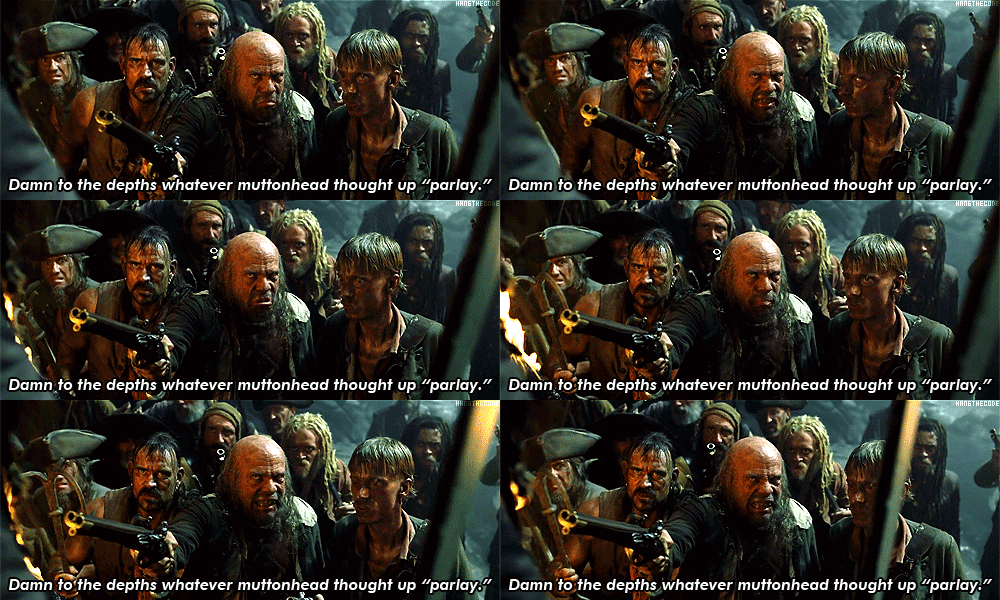

At the end of the session, the party had just about settled on forming an expedition to the catacombs, looking for additional volunteers to accompany them from among the local adventurers...

Coming soon: A roster of everyone of local interest, for sake of reference.

Tuesday, July 21, 2015

The Four Temperaments Of Elves

One peculiarity of Tolkien's reinvention of Northern European mythologies is that it appeared in several distinct forms: the "children's fiction" of The Hobbit (along with some similar early poetry), the high fantasy Lord of the Rings trilogy, and the elaborate mythology laid out in the Silmarillion and other unpublished works. The result is that the reinvention of fantasy staples like "elves" and "dwarves" created not just a single depiction, but a number of competing presentations. Elves in The Hobbit are frivolous and wild merrymakers, while elves in the trilogy are noble warrior-sages.

Mucha, The Four Seasons
While the setting of Middle Earth creates an explanation for why elves come in different varieties, I think the basic idea of elves being divided by history and genetics is less interesting than the idea of them being divided by temperament. In a game setting, no one has enough time to listen to a long discourse on the history of your pseudo-Tolkienesque elves. But the personality types are immediately obvious. I've grouped them by "season", which seems appropriate for a nature-oriented magical race.

Vernal Elves
Vernal (springtime) elves are lighthearted and full of nonsense. They love jokes and jests, and are prone to singing and dancing. They are sanguine and make for pleasant company, at least for those with a tolerance for their foolishness. They are hard to motivate, and tend toward the vice of frivolity. (Example: Rivendell elves in The Hobbit)

Estival Elves
Estival (summer) elves are seekers of pleasure and leisure. They love wine, feasts, and hunting, and favor epic poetry and romantic ballads. They are skilled at entertaining, although they often dislike the intrusion of uninvited outsiders.  They are boastful and stubborn, and tend toward the vices of arrogance and passion. (Example: Elves of Mirkwood in The Hobbit)

Autumnal Elves
Autumnal (autumn) elves are melancholy, weighed down by sorrow and longing. They secret themselves away in distant forest groves, either dreading change or else seeking a quiet reconciliation with the loss it brings. They are wise and noble, and have a fondness for ancient lore. But they are tragic, living in a world of fading dreams, and prone to the vice of despair. (Example: Galadriel and the elves of Lothlorien in the trilogy)

Hibernal Elves
Hibernal (winter) elves are brooding and intense, and are susceptible to anger or jealousy. They value craftsmanship and warfare, and are quick to take offense and slow to forgive. They make for powerful allies, but fearsome enemies. They are prone to the vices of cruelty and vengeance. (Example: The Noldor, particularly Feanor and his sons, in The Silmarillion)

Again, these aren't subraces or species of elves, but elves of a given personality type and philosophical outlook. In a fantasy game world where elves are often found in the same geographical regions as fey creatures, it would make sense that these tendencies would emerge not genetically but from contact with that aspect of the faerie realm. Vernal elves would be influenced by the company of playful sprites and pixies, estival elves would make their homes amid lusty satyrs and centaurs, autumnal elves would prefer to live near dryads and nymphs, and hibernal elves would be hardened by living a constant state of war with sinister fey like boggarts and formorians.

In my own game world setting of Proxima, I imagine that these classifications are explicit -- so that someone could actively refer to a group of elves as "Elves of the Summer Court", and everyone would know exactly what that meant.

Saturday, July 18, 2015

Religious Affiliations In Proxima

It's becoming important to nail down the precise relationships between different groups in the Green Pass region, now that the agents of the long-forgotten evil god Nergal are running amok and threatening to cause trouble. Ordinarily the logical response would be to create a Combined Army of Good to combat the threat, but of course that's easier said than done. Here's a rough breakdown of where different religious views are in conflict, complicating that kind of cooperation.

The Church of Durnovar

Description: Basically medieval Catholicism with the serial numbers filed off. Formally monotheistic, though with the usual assortment of celebrated angels and saints who have their own private cults (which the Archbishop of Durnovar grudgingly tolerates).

Alignment: Lawful (with some neutral adherents)

Popular Saints and Angels: St Michael, St Raphael, St Gabriel, St George, St Brendan, St Martin, and inevitably, St Cuthbert

Common Classes: Cleric, Wonderworker, Paladin, and a few fighting Mystics

Enemies: Pretty much any religions that follow other gods, but especially cults. More liberal members might argue that the more benevolent gods of the old pantheons are "angels freelancing under different names" -- but you wouldn't want to say that in front of the Archbishop.

Old Faiths

Description: Basically pre-Christian medieval paganism. Instead of filing off the serial numbers, I'm inclined to just leave the names the same, but change up their domains a little. It's easier to say "This dwarf is a cleric of Thor, but Thor is also a god of smiths in this world", rather than say "This dwarf is a cleric of Norvek, who is a god kinda like Thor -- and now I expect you to memorize two dozen gods I made up the same way, and also to know which real-world mythological figures they most resemble."

Alignment: Neutral (with some lawful adherents)

Popular Gods:
  • Dwarven (Scandanavian): Thor, Odin, Loki, Freyja
  • Elven (Celtic): the Dagda, the Morrigan, Brigid
  • Human (Greco-Roman): Apollo, Athena, Artemis
  • Ancient Civilizations (Mesopotamian/Egyptian): Marduk, Horus, Isis
Common Classes: Priestess, Shaman, non-chthonic Witch, Bladedancer, and any divine Dwarven or Elven classes

Enemies: The Church of Durnovar (which wants to absorb/replace them), other pantheons, and underworld gods within the same pantheon

Cults

Description: All pantheons have a malevolent underworld god who is tolerated but rarely loved. Sometimes a cult will spring up of unscrupulous types who try to curry favor with the underworld by expanding its ranks through wars or human sacrifice. These groups are secretive and try to conceal their structure and leadership. The Church of Durnovar regards all these "gods" as merely diabolical fiends from the Abyss, although that's mostly a matter of semantics.

Alignment: Chaotic

Popular Gods: Tiamat, Orcus, Sutekh, Nergal, Demogorgon (all in their classic D&D incarnations, not their more nuanced real-world ones)

Common Classes: Anti-Paladin, chthonic Witch, plus evil versions of any standard divine class (usually casting reversed versions of healing/buffing spells)

Enemies: Pretty much everyone, but especially rival cults (hey, that's chaos for you!)

Monday, July 13, 2015

Green Pass Campaign II, Session 5: Swatting Mosquitoes While The World Ends

Tether went home for the summer, so we're down by one player. At this rate, I'm not sure if there will be anything left when he comes back. I spent a while frantically prepping the catacombs before the session, so predictably that was the one place that nobody wanted to go.

June 24, Caudex Annales, 70 AUP
While Malcolm recovered from his excessively intimate encounter with a spiked pit, the rest of the party went back to Centerpost for the week. Piper the bard decided to propose to the long-suffering sage Fridaswitha with a 300 gp ring, which in hindsight should have tipped everyone off to start checking his socks for suicide notes. Frida implored him to retire to a life of musical performance, but instead he slipped off on some scheme to create a complete tailored set of vestments to robe himself as a Necrolyte of Nergal. He decided to keep this new costume secret from the rest of the party as a surprise. Everyone loves surprises.

On the way back, he elected to have a peek at the runic tablet that the sage had pushed away in horror. One glimpse of the cursed runes and Piper promptly took permanent leave of his sanity. No one noticed immediately, given his reputation for erratic behavior. This gave him plenty of time to slip off toward the haunted moorlands by himself, once they had settle back in at the keep's tavern. More on that later!

That face is so wrong
Meanwhile, everyone else (except Meros, who wanted to loot more graves) voted to head to the orc-infested cave area for more clues about the threat from the east that had initially most worried the castellan. They set out along the road, and carefully scouted the entrances to the caves upon arrival. Most of the entrances were dead quiet, but one of them stank horribly and another was emitting a mysterious din of beastly noises. Scouts reported a number of small flying monstrosities within in a generally agitated state (agitated mainly because Finkle dumped a drive-by faerie fire on one). The prospect of something worth smashing excited the martially inclined saurian Zegzinu, who began lumbering toward the cave at top speed (20' per round) in hopes of a fight -- with everyone else following a few steps behind. Upon his unsubtle entrance into the first high cavern in the tunnel network, a group of angry ACKS-style stirges immediately descended to feast upon the party's blood.

The tumult of battle attracted the attention of the cave's real master, a grumpy minotaur, as well as a few hungry beetles. They all moved quickly to the entrance in time to to intercept the second wave of the party's reinforcements and create a thoroughly chaotic melee. The minotaur brained Bartimaeus with an axe, despite heavy damage from Reed's earth's teeth. The stirges managed to extract enough blood from Bar Helm to render him comatose, perforating his limbs, abdomen, and face with their greedy proboscuses probisces probosci pointy-type-noses. Meanwhile, Dunflow's evisceration of the beetles back at the entrance tunnel suggested that Renata was probably rather more unhappy about losing her broadsword (+3, in fact) than was previously appreciated.

Minotaur (by Speeh)
The minotaur's lair was at the end of a mazelike set of passages that would have allowed him to easily pick off scouts one by one, so it was probably lucky that the fight lured him into the open. Behind a stone slab in the lair, the party discovered a collection of treasures, including two locked chests which Zegzinu promptly smashed into smithereens with a spear, the classic lizard lockpick. (Breakin' stuff!) This violent approach tragically resulted in the loss of a growth potion.

Meanwhile, the chorus of voices now swirling inside Piper's head were full of all kinds of helpful advice. Most of the advice revolved around applying his prodigious diplomatic skills toward the considerable challenge of befriending the lonely long-dead champion of Nergal sleeping in the southeastern-most barrow mound. A bit of small talk via more blood-seeping messages in the dust revealed that the Black Legion captain's favorite food was "the marrow of a righteous man's bones", and Sir Pants-on-Head the Bard felt comfortable interpreting this as a generous dinner invitation, to the resounding approval of his newfound cranial interlocutors.

He set himself to work with good cheer, smashing apart the great band-wrought doorway with a pickaxe, and donned the bespoke ceremonial vestments that he had purchased in Centerpost at great personal expense. Oh, but he looked absolutely fabulous in the matching pair of demon-face gloves, crooned the voices. Descending the stairs into the crypt, he discovered a sarcophagus with a bas relief stone-carved knight on the cover, and pushed it aside to reveal a wight -- who was not, in fact, Varghoulis at all, but only his faithful gonfaloniere.

The gonfaloniere was greeted by a rollicking birthday-celebration polka.

Varghoulis himself was in a matching chamber beyond a secret door in an even finer sarcophagus. Opening this sarcophagus (which the wight accomplished with contemptuous ease) had the effect not merely of releasing Lord Varghoulis (Captain of the Black Legion, Champion of Nergal, Inquisitor-General of Umeskelion, and general Scourge of the Living), but also of similarly arousing the entire guards-corps of the legion, including four nearby lieutenants and ten sergeants from an adjacent barrow with their accompanying contingent of adjutants and attachés -- all in an advanced state of decay and undeath. As they broke forth from the earth like frogs boiling out of swamp mud, the sky darkened and erupted into a swirling and crackling vortex of necrotic energy that stretched up into the heavens, a hellstorm that announced apocalyptic doom to everyone for miles in every direction

It was a good bit of solo work, and with his last vestige of sanity the charming and charismatic bard rolled a successful reaction check that established himself as an honorary officer of the Black Legion's fife and drum corps. Which just goes to show that combat skills are vastly overrated, whereas diplomatic specialization comes out ahead every time.

Lord Varghoulis: "Sup, bro."
Casualties
Brother Bartimaeus, addled due to brain trauma (-10% experience, -2 proficiency checks)
Bar Helm, blinded in one eye (-2 ranged attacks, requisite eyepatch)

Treasure and Experience
Coins: 903 gold and 310 electrum (=> 1058 gp)
Gems/Jewelry: 3 pieces of jewelry (1600, 900, 600) (=> 3100 gp)
Trade Goods: a pair of minotaur horns (320 gp)
Items of special interest: 2 potions (gasous form, ?), the minotaur's spear, a suit of ornate plate mail, and a staff

Total nonmagical treasure value: 4478 gp, less 64 gp (20% fee) to appraise jewelry
Gold per share: 465 gp

Explored: minotaur cave complex

Kills: 1 minotaur (320 xp), 9 stirges (117 xp), 3 fire beetles (45 xp)
Put to flight: 2 stirges (25 xp)

Total experience from treasure: 4478 xp
Total experience from kills: 507 xp
Total experience from exploration: 100 xp
Total Experience Gospel Choir: ft. Barry Manilow
Total experience: 5085
Total experience per member: 509 xp

(Note: Mort the Wardog is taking an  experience half-share but not a treasure share. Brother Bartimaeus takes a half-share of each.)

I can't see how Peter's bard is going to survive this, but we can at least rest assured that he'll be remembered fondly as another exemplar of his celebrated profession.


Tuesday, June 30, 2015

Balance And Social Contract

After the last session, I had one of my players chatting with me about how different games systems are good for different purposes. In particular, he mentioned the way that PFRPG encounters have an automated system for ensuring encounter balance through a detailed challenge rating formula.

My immediate reaction was that this was something that came at the cost of strategic decision. If an entire area consists of nothing but balanced encounters (yielding level-appropriate treasures), then there are really no encounter-selection decisions to be made. Whatever you attack, it will give you about the same challenge, scaled to your level, with roughly the same reward. There's no need to exercise selectivity in deciding whether or not to bash down a door and kill what's inside. It's just guaranteed to be something you can defeat, given average luck. Nor does it help to avoid that encounter, since the very next one will be about the same difficulty -- and yield about the same treasure. You'll just waste the time explaining how to avoid the encounter only to move on to a reskinned version of the exact same thing. So the game becomes a methodical room-clearing exercise, like many computer RPGs.

This isn't always necessarily a bad thing. In 4th edition D&D, in particular, the intent of WotC was clearly to make a good tactical miniature man-to-man combat system, and to allow that tactical combat to have a lot of richness and complexity. For someone wanting to luxuriate in a detailed tactical simulator with lots of crunchy gamist decisions to make, this is exactly the mechanics you want. Anything else would be silly -- like having everyone set up a Warhammer 40K Table, only to roleplay a parley between the Space Marines and the Tau that resulted in a truce that required everyone to pack up the table and go home.

In my current campaign, though, the ACKS rules pretty explicitly emphasize strategic-level decision. Character classes are designed around non-combat capabilities; a bard, say, is a wimpy fighter with powerful non-combat proficiency options. But more importantly, the game itself employs an old-school approach toward the integration of "balance" into the game's social contract. The philosophical contrast is this:

  • In a modern RPG, balance is a one-sided GM responsibility.
  • In a retro RPG, balance is a negotiated aspect of emergent play.
In an earlier post, I noted how old-school RPG play really has four distinct modes: (1) dungeon-crawling, (2) hex-crawling, (3) mass combat, and (4) strategic resource management. The "dungeon crawling game" bears a strong superficial resemblance to a modern packaged adventure path, with monsters populating a traditional dungeon. But the mechanics of the old-school dungeon-crawl are vastly different than in more modern systems because of the pivot away from session-long resource management. Really, most modern games have more in common with the "hex crawling game" in terms of structure, as isolated encounters that don't share resource pools.

The critical difference in the system is how hit points are understood. A modern game (4th edition onward, or any recent computer game) tends to interpret hit points as "luck", or "stamina", or "the favor of the gods". When they run out, the next hit kills you because you exhausted your supply of those intangibles. It's easy to regain those intangibles between battles with a "healing surge", or a "quick rest", or some similar mechanic. Even some spell-like effects work the same way, implemented as "per encounter" or "at will" abilities, or by allowing a quick rest to recover some or all spell slots (points, whatever). Death is replaced by a temporary knock-out effect. As a result, each combat can be balanced in roughly the same way: You assume everyone starts at full health, and build a mirror-image collection of enemies. This makes it perfectly sensible to put together a series of encounters that all have identical challenge ratings, maybe with a slightly harder boss fight at the end for drama.

A simulationist retro-RPG like ACKS extends resource management over the entire session. Hit points (understood as "flesh wounds" or "blood loss") can't easily be returned, since healing spells are pretty weak and natural healing takes forever. Spells are "per day", not "per encounter". Death is permanent, and serious injuries are realistically incapacitating. This means that putting together encounters that are "balanced" will beat down the party quickly (which might be fun for a Tomb of Horrors-esqe tournament module, but not for a long campaign). Instead, the responsibility of the GM is to ensure that most encounters are weak, and the few strong encounters are either avoidable or else are capstone events for which the party will be able to carefully plan and prepare (to wring every advantage out of combat-as-war strategems). The weak encounters never yield good rewards and drain resources, so it's more efficient to bypass them when possible. If you want a tough encounter with good rewards, you need to do the legwork to find one.

(Incidentally, I'd say that 3rd edition D&D and PFRPG are both centrist systems that encourage a little of both approaches.)

The party bears a much heavier level of responsibility for finding methods of identifying and classifying potentially difficult encounters, to know when to avoid them or how to prepare for them. Kicking down every door will eventually lead to a total party kill. Several common methods of gathering strategic information include:
  • Dungeon geometry tropes: E.g. the deep caves have nastier monsters, so dwarves get a "detect slopes and depths underground" racial perk
  • Scouting techniques: Listening at doors, for example, is usually prudent before bashing them down
  • Parley with dungeon denizens
  • Interrogation: Leave an orc alive after combat to see if you can get a sense of where the Big Bads are holed up (hopefully you took "orc" as a language!)
  • Exploiting dungeon faction rivalries
  • Disguise and infiltration
  • Divination magic (once you figure out the right questions to ask!)
  • When all else fails, exploring recklessly and then running away from that demilich...
The social contract for a GM is to provide a lot of non-fatal encounters that slowly nickel-and-dime the party's resources (spells and hit points) to the point of feeling progressively more weak and vulnerable as they approach a major objective -- so that "Do we really want to keep going?" is a tough call, not a no-brainer.

Monday, June 15, 2015

Green Pass Campaign II, Session 4: Grave Robbing

Note: I'm adding a cumulative +10 xp bonus counter for exploring rooms in a single expedition (i.e., the second room gets +20, the third gets +30, and so forth, up to +250 for the 25th room this week). Since this session was a continuation of last week's expedition, the counter wasn't reset.

June 10, Caudex Annales, 70 AUP
After dispatching a room of zombies, the party elected to break for a short lunch. Finkle the gnome had apparently wandered off (with Mort the wardog and his new pet rat) to do something odd and gnomish. Attempts to inspect the glowing gem in his pot resulted only in the immediate disappartion of the gem with a small 'pop'.

In a room beyond the zombies, searching revealed a set of strange boxes, each full of bones and a single right-handed glove with a weird demon face on them. After lifting the boxes the examine them, a set of four small levers were discovered under each box. Using gloved hands, the party successfully triggered a secret door into a nearby burial chamber containing the remains of a priest of the old nature god Silvanus, with a shrine beyond. The priest's vestments and cudgel were well-preserved, and stashed away for future study. The bard Piper left a small offering and received the blessing of Silvanus in return.

Progressing through a series of similar hidden doors to the south earned egress into a well-traveled hallway that led to a gruesome scene. Two grave-robbers were impaled into the solid stone wall by spears as a warning, their intestines ripped open and slowly rotting. There were also a set of peculiar tracks (definitely non-human) leading east out of the room. The party elected to split into two groups, one following the tracks, and the other positioning as a rear guard.

Following the tracks led to a strange little poltergeist shrieking curses in some lost language to break the silence of the dungeon, and hurling small bits of rock and pottery. A single arrow dispatched the creature. Beyond the ghost, a door led to a small cache of abandoned supplies, including a sledgehammer. Beyond the cache was a bricked door, easily dismantled. Inside the sealed room beyond they found a strange scrying basin surrounded by a set of six carved stone knights in alcoves sunk into the walls. Fearful of the guardian knights, the explorers elected to leave the basin (mostly) undisturbed and returned to the main party.

(Art: Thomas Denmark)
Just beyond the entry point, the party decided to explore up a short hallway... and discovered a pressure-sensitive plate that set off a portcullis. The front lines of the party were briefly cut off as a wave of skeletal guards poured into the room. A judicious application of lizardly force to the gate allowed for a swift reinforcement, although with a powerful incantation from Reed crushing most of the skeletons with earthen teeth, it was hardly an emergency.

After some reshuffling of party members, the exploring group found another bricked-up entrance that led into some private burial chambers. All three tombs contained minor bits of coin and jewelry, and only the middle one had any guardians, some recently risen skeletons. (Well, unless you count a cluster of those nasty little rats squashed beneath a saurian-opened door.) On the way back out the party was jumped by a few more zombies, but dispatched them with relatively little effort.

Feeling uneasy about emerging onto the barrow moors at night, the party elected to return to the Keep (and Centerpost) to recuperate. The sage, Fridaswitha the Scriptrix, identified the ring (as a ring of protection), the cudgel (as a simple enchanted club), the vestments (as an elementally-warded spidersilk robe), and the gem by reputation (clearly something cursed, and now bound permanently to Finkle). She looked with dismay at the small stone runic tablet recovered from the skeletons' tomb, on the grounds that it might contain useful information but would just as likely contain a horrible curse of death. Apparently the party will need to discover someone braver (or more gullible) than her to read it!

Terra and the barbarians continued to investigate the strange travelers passing through Centerpost from the east. Meros the nightblade found an underworld fence willing to purchase his dubiously pocketed gem.

The bard applied his considerable skill at seduction to arrange a charming dinner date with Frida (a perfect 10 on the Hot-or-Not Dice Check, just for the record), deciding only at the last minute that it
might be ethically dubious to propose marriage to her solely in order to get a long-term discount on magical item identification. For now.

Treasure and Experience
Coins: 400 gp, 30 gp, 20 gp, 91 sp, 400 sp, 123 sp, 300 sp, 200 sp (=> 561 gp)
Gems/Jewelry: 15 gems (200 each), electrum necklace (56), 2 electrum bracelets (52 each), silver locket (60), 2 platinum necklaces (174 each) (=> 3394 gp)
Trade Goods: 4 demon-face ceremonial gloves that are really good for disguising your right hand during... a puppet show, maybe?
Items of special interest: a magical ring, a glowing gem, spidersilk clerical vestments, a cudgel, a runic tablet, a pale grey potion, and a sky blue potion smelling of lilacs

Total nonmagical treasure value: 3955 gp, after -679 gp (20% fee) to appraise jewelry
Gold per share: 312 gp

Explored: 25 rooms (1 barrow mound with 3 rooms, 22 catacomb rooms)

Killed: 11 giant rats (55 xp), 7 skeleton guards (91 xp), 4 zombies (116 xp), 7 skeletons (91 xp), 1 noisy poltergeist (5 xp), 6 zombie patrollers (174 xp)
Turned: 7 zombies (203 xp)
Tricked into wandering off to certain doom: 11 tomb robbers (550 xp)
Squashed by a punched-in door ('saurian lockpick'): 8 giant rats (40 xp)

Total experience from treasure: 3955 xp
Total experience from kills: 1325 xp
Total experience from exploration: 3250 xp
Total experience: 8530 xp
Total experience per member: 741 xp

Note: Meros the greedy nightblade receives an additional 200 gp and 200 xp for his malicious act of thievery. And possibly also the eternal seething hatred of the rest of the group -- but, hey, shiny gem!

Thursday, June 11, 2015

Combat Maneuvers

Every man-to-man combat system begins with the assumption that both sides will take turns bipping one another with swords or lasers or whatever. The moment you allow for more complicated forms of interaction, things can get amazingly complicated in a hurry.

Our current campaign under the ACKS system uses a double-test for any special combat maneuver:
  • make a normal attack with a -4 penalty, then
  • give the target a saving throw vs paralysis
Effectively this makes success depend on three things: (1) attacker level, (2) defender armor class, and (3) defender level. (There's also a loose admonition to apply suitable penalties for size differential, but those are left to judge's discretion.)

The most controversial feature here is armor class. The system designer (Alex Macris) is pretty adamant about the innovation of a "touch AC" in D&D (or a CMD in Pathfinder) going to far in terms of negating the value of gear. The concept here is that being armored doesn't just block attacks, it also frees you up to defend in a totally different and far more confident way. A knight doesn't need to focus on anything except holding a sword and using it to beat someone else on the head. A light fencer needs to focus on survival-footwork first, and so is much more vulnerable to trickery. For example, he's going to constantly be using his sword to parry, which is going to make it easier to sunder that sword.

From a gamist perspective, there's another argument at stake here: "tanks" should be hard to control. If a heavily armored fighter steps forward, you don't want there to be a single right answer for how to neutralize him every encounter. "Trip him and make him fall down" is funny the first time, but if it happens every battle and becomes such an obvious tactic as to be mandatory, then it's negating the whole concept of having armor class as a numerical proxy for defense ability. The best tactic is then always to grapple the tank, then run past to murder everyone else. So special maneuvers shouldn't, in general, be able to disregard armor class, since that would negate the value (and fun) of stomping around the battlefield as an impregnably armored behemoth.

The bottom line is that I've decided it's probably best to keep using armor class as the defending stat for special maneuvers, rather than try to introduce an independent combat maneuver defense. For things like "sunder weapon" or "disarm", I think the best approach might be to define an alternate minimum armor class equal to level + strength-bonus, so that hulking shirtless barbarians can still hold onto their giant axes. High AC defenders could still use armor class, but low AC strikers could replace that with their raw force and tenacity.